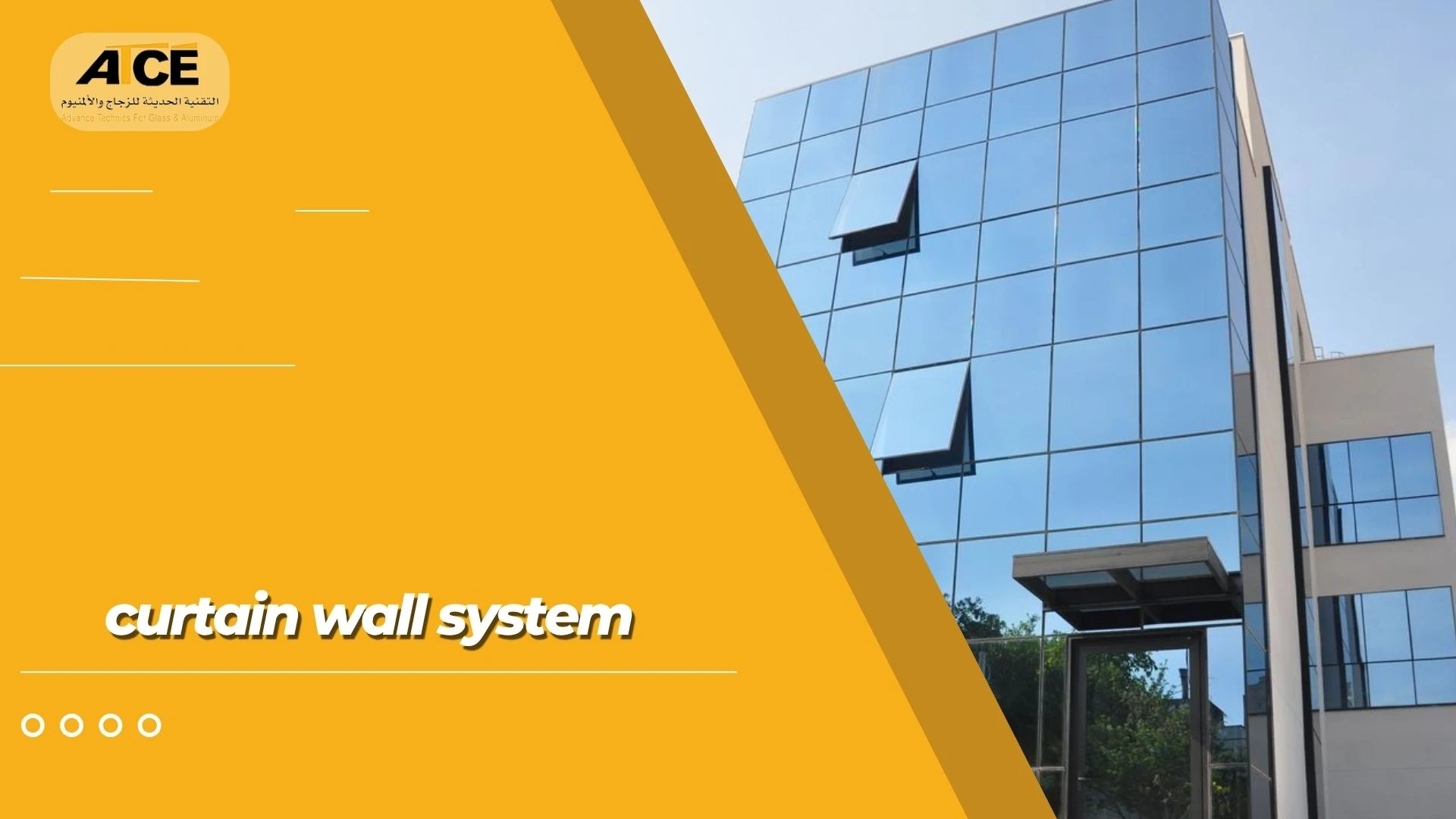
Walk past any new commercial tower in Riyadh, Jeddah, or NEOM and you will notice something striking: glass facades that stretch from ground to rooftop, catching light, reflecting sky, and signaling modernity. What you are looking at is a curtain wall system, and it is doing far more work than most people realize.
In Saudi Arabia, a curtain wall is not a luxury upgrade. It is a calculated engineering decision that affects your building's energy bill, structural safety, occupant comfort, and long-term maintenance costs. With temperatures regularly exceeding 45°C, relentless UV exposure, and seasonal sandstorms, any facade system not engineered for this climate will cost you far more to maintain than it ever saved you to install.
Why Curtain Wall Systems Matter More in Saudi Arabia
Saudi Arabia's construction environment creates challenges that simply do not exist in temperate climates. These are structural and thermal problems that show up as leaked joints, overloaded air conditioning, and premature glass degradation if the facade system is not properly specified from day one.
Extreme Heat & Solar Radiation
Without Low-E glass and thermal breaks, solar heat gain can increase cooling loads by 25 to 40 percent — adding to every energy bill permanently.
Sand & Dust Infiltration
Airtight EPDM gasket detailing is critical. KSA conditions require more than water tightness — fine dust destroys interior finishes when joints fail.
SBC 601 Compliance
Saudi Building Code energy requirements mandate thermal performance in building envelopes. Non-compliant facades cause costly approvals delays and retrofits.
Vision 2030 Quality Standards
Giga-projects in Riyadh, Jeddah, and NEOM are raising the baseline. Developers who cut corners on facades find their buildings outclassed in a rapidly maturing market.
A Growing SAR 3.4B+ Market
The KSA glass curtain wall market is projected to reach USD 5.24B by 2030. Demand for high-performance facades is accelerating, not slowing down.
Acoustic & Comfort Performance
Well-designed curtain walls reduce external noise entering commercial and hospitality spaces, directly improving occupant satisfaction and building ratings.
What Is a Curtain Wall System?
A curtain wall system is a non-structural, external facade attached to a building's structural frame. It carries no floor or roof loads. Its job is to enclose the building, protect occupants from weather and heat, control light and glare, and deliver the architectural appearance the design demands.
The system typically consists of aluminum framing (mullions and transoms), glass panels or opaque infill panels, thermal break elements, sealants, and anchoring hardware that connects the facade to the building's concrete or steel skeleton. Because it is non-structural, the curtain wall can span multiple floors while remaining relatively lightweight — which is why it dominates commercial towers, hospitality projects, and high-end mixed-use developments across KSA.
Do not specify your curtain wall system without consulting a local facade engineer who understands Saudi wind load standards, SBC 601 thermal requirements, and the specific site orientation of your building. The wrong system costs far more to fix than to get right the first time.
Types of Curtain Wall Systems: Which One Fits Your Project?
Not every curtain wall is the same. The right system depends on your building height, design complexity, project timeline, and performance targets. Here are the five main types used across KSA commercial and institutional projects.
1. Stick-Built Curtain Wall System
Assembled on-site component by component. Aluminum mullions and transoms are cut to length, delivered to site, and glazed in place by installers working directly on the facade. Flexible for complex geometric shapes that are common in Saudi landmark projects.
Best for: Low to mid-rise buildings under 15 floors, complex or irregular geometric shapes, projects where on-site adaptability is needed.
2. Unitized Curtain Wall System
Prefabricated in a factory into large floor-height panels, pre-glazed under quality control, then installed by hooking each unit onto the building's structural anchors. Factory-controlled joint tolerances mean superior air and water tightness — critical for KSA dust conditions.
Best for: High-rise towers above 15 floors, fast-track construction schedules, projects demanding consistent performance across large facade areas.
3. Semi-Unitized Curtain Wall System
Combines factory prefabrication with some on-site assembly. Sub-assemblies are factory-produced while final glazing or specific components are completed at the site. A practical middle ground for mixed-use developments where residential and commercial facades meet.
Best for: Projects needing prefabrication benefits but with design features that make full unitization impractical.
4. Structural Glazing System
Glass panels are attached to the aluminum frame using structural silicone adhesive rather than visible mechanical pressure plates. The result is a flush, uninterrupted glass surface. The flush exterior also eliminates horizontal ledges where desert dust accumulates.
Best for: Premium office towers, luxury hotels, and institutional buildings requiring continuous, uninterrupted glass surfaces.
5. Point-Fixed Glass (Spider Glazing)
Glass panels suspended using stainless steel fittings bolted through holes at each glass corner, supported by a steel or aluminum substructure. Delivers exceptional visual transparency and dramatic architectural effect for lobbies, atriums, and airport terminals.
Best for: Building lobbies, large-span atriums, airport terminals, and spaces where maximum transparency is the design priority.
Key Components of a High-Performance Curtain Wall
Understanding what goes into a properly built curtain wall system helps you ask the right questions when evaluating contractors and quotations.
Aluminum Mullions and Transoms
These are the vertical and horizontal aluminum extrusion profiles that form the grid of the curtain wall. Profile depth, wall thickness, and thermal break design directly affect structural capacity and thermal performance. In Saudi Arabia, profiles must accommodate the large temperature differentials between the heated exterior and the air-conditioned interior — a swing that can exceed 30°C across the same facade.
Thermal Break
A layer of low-conductivity polyamide inserted into the aluminum profile to interrupt heat conduction between exterior and interior surfaces. Without a thermal break, the aluminum frame becomes a thermal bridge that pulls heat into the building and causes condensation on interior surfaces in air-conditioned spaces. In KSA, this is not optional.
Glass Selection
Glass choice is arguably the single most impactful specification decision for KSA projects. The table below compares the most common options.
| Glass Type | Thermal Performance | Solar Control | KSA Suitability | Typical Cost |
|---|---|---|---|---|
| Single Glazed | ✗ Poor | ✗ Poor | ✗ Not recommended | Lowest |
| Double Glazed IGU | ✓ Good | ✓ Moderate | ✓ Standard baseline | Moderate |
| Low-E Coated IGU | ✓✓ Excellent | ✓✓ High | ✓✓ Recommended | Medium-High |
| Triple Glazed | ✓✓✓ Superior | ✓✓ High | ✓ Premium projects | High |
| Laminated Safety Glass | Varies | Varies | ✓ Low-level panels required | Medium |
EPDM Gaskets and Sealants
Gaskets create the primary seal between glass panels and the aluminum frame. In KSA, gaskets must be UV-stable and heat-resistant to maintain their sealing properties through decades of Saudi summers. Sealants fill secondary joints and must maintain flexibility across the full range of thermal expansion and contraction the facade experiences through the day and across seasons. Silicone sealants should be inspected and resealed approximately every 15 to 20 years in KSA's intense UV environment.
Curtain Wall System Costs in Saudi Arabia 2026
Cost ranges in KSA are wide and depend on system type, glass specification, and building complexity. These are reference points — your actual cost needs a project-specific assessment.
When evaluating quotes, always request a detailed breakdown of materials, labor, accessories, and warranty terms. Transparent quotations help compare options and identify where cost savings are genuinely possible without sacrificing performance.
Common Curtain Wall Failures and How to Avoid Them
⚠️ The Most Common Costly Mistakes in KSA Projects
- Water and dust infiltration at joints: Usually caused by inadequate sealant specification, improper gasket installation, or drainage paths that trap water. Two-stage drainage detailing and correct EPDM gasket compression prevent this.
- Thermal bridging and condensation: When thermal breaks are absent or poorly designed, the aluminum frame conducts heat directly through the facade. Proper thermal break specification is non-negotiable in KSA.
- Glass breakage from thermal stress: Monolithic glass panels can crack when one portion is shaded and another receives direct sun. Heat-strengthened or tempered glass is required for commercial applications in Saudi Arabia.
- Fastener corrosion in coastal cities: Chloride-rich air in Jeddah and Dammam attacks standard steel fasteners within a few years. Stainless steel grade 316 for all exterior anchor hardware is the minimum standard.
- Incorrect anchor design: Anchors that do not allow for thermal movement or structural deflection impose stress on the curtain wall frame, cracking sealants and distorting mullions over time.
Curtain Wall Systems and Vision 2030
Saudi Arabia's Vision 2030 is reshaping how buildings are designed, built, and operated across the Kingdom. Major giga-projects including NEOM, Diriyah Gate, the Red Sea Project, and Qiddiya all demand facade systems that deliver energy efficiency, architectural innovation, and long service life. Their specifications are filtering down to commercial and institutional projects across Riyadh, Jeddah, and Dammam.
The Saudi Green Initiative's targets for reducing energy intensity in the built environment mean that glass curtain walls without proper thermal performance will increasingly struggle to gain approvals for major projects. Energy modeling demonstrating SBC 601 compliance is becoming standard in project documentation, and curtain wall contractors who cannot support this process are becoming less competitive in the KSA market.
Why Choose ATCE for Your Curtain Wall System in Saudi Arabia?
At ATCE (Advanced Technology for Glass and Aluminum), curtain wall systems are not a side service — they are a core expertise built over more than two decades of delivering glass and aluminum facade solutions across Saudi Arabia. ATCE designs, fabricates, and installs curtain wall systems engineered specifically for KSA climate conditions, not adapted from overseas products that were never designed for 45°C summers or desert dust.
Local Engineering Knowledge
Every project begins with a site-specific assessment covering building orientation, local wind loads, sun angles, and SBC 601 thermal targets.
Material Quality
Aluminum profiles, glass units, and sealing systems selected for long-term performance in Saudi conditions — not just initial installation cost.
End-to-End Accountability
From design coordination through fabrication, installation, and post-installation inspection — one point of contact throughout the full project lifecycle.
Proven KSA Portfolio
Completed projects across Riyadh and the broader Kingdom demonstrate delivery capacity at commercial scale, on program, and to specification.
Ready to Discuss Your Curtain Wall Project?
ATCE's team in Riyadh offers free technical consultation and transparent project quotations. The best time to engage a facade specialist is early in the design phase — it shapes structural planning, anchor design, and energy modeling before costs are locked in.
💬 Get a Free Quote on WhatsApp

[…] اختيار النظام المناسب مثل الإطارات، Curtain Wall، Structural Glazing أو غيرها حسب التصميم […]